Feeling faint, unsteady, or woozy — often positional (orthostatic) or triggered by sudden movement. Common during fasting, low-carb diets, intense exercise, or when starting blood pressure medications.
Insights
Dizziness or lightheadedness can feel like faintness, wobbling, or a sudden woozy spell, especially when standing up or moving quickly. Tracking when it happens alongside meals, fluids, exercise, heat exposure, and medication changes may help reveal patterns to discuss with a clinician.
Note whether episodes follow standing up, fasting, low-carb eating, or heavy sweating, and track hydration and electrolyte intake without assuming extra salt or supplements will help.
Look for timing around intermittent fasting, cold water immersion, infrared sauna sessions, or HIIT, and stop the activity if you feel faint.
Record symptoms after starting or changing blood pressure medicines, GLP-1 medications, or testosterone therapy, and discuss them with your prescriber rather than changing doses yourself.
Discuss recurring dizziness and whether Zone 2 cardio is appropriate with a clinician; seek urgent care for fainting during exercise or dizziness with chest pain, trouble breathing, new weakness, or trouble speaking.
For informational purposes only. Not medical advice.
These results get better as more people use BioSocial. When members log dizziness / lightheadedness alongside the practices they follow, we show how often each one actually helped or made it worse.
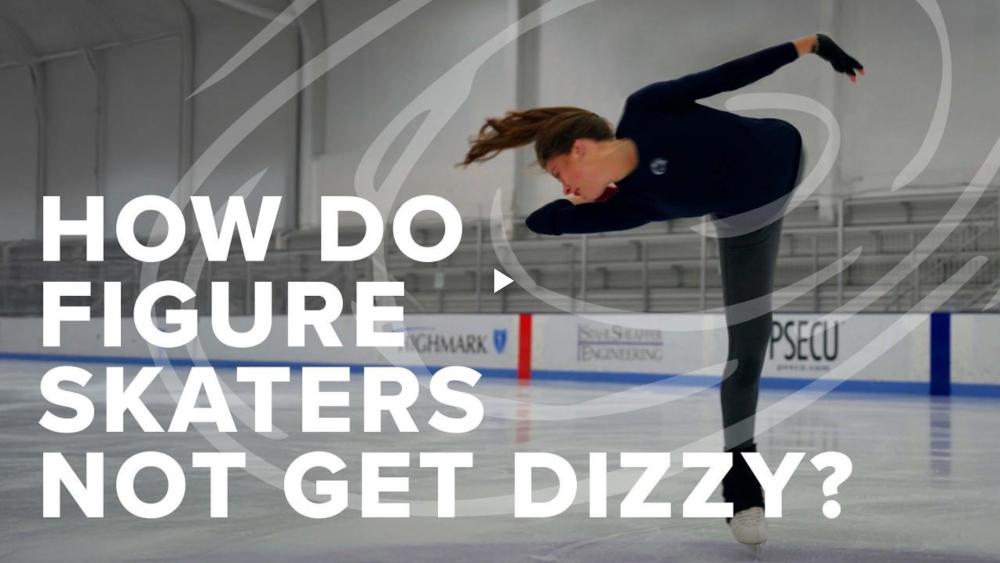
Why don’t figure skaters get dizzy when they spin?
Years of training help figure skaters overcome the dizzy feeling that fast spins cause in most people.
Penn State’s video explores this with Tarkeshwar Singh, a professor who studies human movement. Angela Paxos, a student and figure skater, joins him. They explain how the inner ears help create that sensation. They also discuss how trained skaters overcome it.
For our [Dizziness / Lightheadedness]( /symptoms/cardiovascular/dizziness-lightheadedness) community, the key detail is the trigger: spinning quickly. The article says most people feel unsteady and lose balance after fast spins. Some also experience Nausea. Years of Skating training help skaters handle this response.
This is an explanation, not a treatment study. The supplied article gives no measured change in symptoms. It also gives no exact training timeline beyond “years.” It does not test whether spin practice helps people who feel faint when standing. That limits how far we can apply its takeaway to everyday symptoms.
For members tracking their own patterns, context is worth recording alongside numbers. A log could capture the movement before an episode and how long it lasted. It could also include how strong the sensation felt on a consistent scale. Those details can make community comparisons more useful than a symptom score alone.
The useful takeaway is not to copy a skater’s training. It is to keep the trigger in view when comparing experiences. What patterns have you noticed in your symptom logs around movement or changes in position?
psu.edu
Ask a Scientist: Why don’t figure skaters get dizzy and fall? | Penn State University
Researchers explain what prevents ice skaters from getting dizzy during a spin and why temperatures affect ice even when they remain below freezing.
What can help vertigo when the Epley maneuver doesn't work?
Semont-plus, a series of head and body movements, may help when vertigo persists after repeated Epley treatments.
UF Health nerve specialists are highlighting this option for people with position-triggered vertigo. This condition makes the room seem to spin after a head movement. Even a small head tilt can set it off. For the [Dizziness / Lightheadedness]( /symptoms/cardiovascular/dizziness-lightheadedness) community, that specific trigger is an important detail. The report concerns this type of spinning, not every cause of feeling faint or unsteady.
The article says this condition affects an estimated 30% of people over 60. That estimate rises to 50% among those over 85. Symptoms can be a brief bother or temporarily disrupt daily life. The Epley maneuver, another set of careful head and body movements, has been used for 45 years.
The main message is another option, not a replacement. The specialists say Epley remains a dependable first treatment. Semont-plus may be especially useful when repeated Epley treatments have not helped. They also suggest it may help when faster recovery is needed. However, the supplied report gives no treatment success rates or recovery-time figures. It does not show how much better or faster Semont-plus might be.
For members tracking their symptoms, the useful takeaway is to compare specific patterns. A shared log could include triggers, episodes per day, and episode length. Recording which treatment was used adds context to changes over time. Comparing those notes with community peers may make experiences easier to understand. It also keeps a report about head-triggered spinning separate from other symptom patterns.
If you've tried Epley or Semont-plus, how did your episode count or recovery time change?
ufhealth.org
UF neurologists tout alternate way to treat stubborn vertigo - UF Health
GAINESVILLE, Fla. — For people who experience benign paroxysmal positional vertigo, or BPPV, even a tiny head tilt can suddenly make it feel like the room is…